It starts out as nothing much. A scrape on the shin while working in the yard, cracked skin between the toes, a bug bite you scratched a little too hard. Not long after, the area turns red, hot and tight, and even your pant leg hurts when it brushes past. There is no bump and no white head: just a red patch that seems bigger every time you check it.
What so many people describe has a name: cellulitis. And no, it isn't the "orange peel" dimpling on the thighs that cream ads promise to erase. In medicine, the word means an infection of the deeper layers of the skin and the tissue just beneath it. In this guide, our medical team explains how to recognize it, how it differs from an abscess and which signs can't wait.
What is going on under the skin
When skin opens up, even through a tiny crack, bacteria that live on its surface can slip inside and multiply. The body answers with inflammation, and that is what you notice from the outside:
- Redness with blurry edges that keeps widening
- Swelling, with tight skin that sometimes looks pitted like an orange peel
- Warmth to the touch
- Pain or tenderness that gets worse with rubbing
- In some cases, fever, chills or a general sick feeling
According to public health sources such as the CDC and MedlinePlus, it shows up most often on the lower legs, although it can appear on the arms, the face or anywhere else. In general it doesn't pass from one person to another the way a cold does.
Cellulitis or abscess?
Both are skin infections and they sometimes show up together, but they are handled differently.
| Feature | Cellulitis | Abscess |
|---|---|---|
| What it looks like | Red patch, flat or barely raised, with fuzzy edges | Round lump, sometimes with a white or yellow head |
| To the touch | Hot, firm skin with no pocket of fluid | You can feel a soft pocket or pressure inside |
| How it grows | The redness spreads outward | The lump gets bigger and tighter |
| What it usually needs | Treatment based on the medical team's assessment | Opening it so the pus can drain |
Once pus has collected, the abscess drainage page explains how it is opened and cleaned under local anesthesia. If what you have is a small lump under the skin that isn't red or warm, the article on lumps under the skin will help you sort it out.
How the infection gets in
There is almost always a way in, even if it was so small nobody remembers it:
- Cuts, scrapes and burns from the kitchen, the job site or the garden.
- Athlete's foot. Moist cracks between the toes are one of the most common doorways for cellulitis of the leg, and hardly anyone connects the two.
- Bug bites scratched until the skin broke open.
- Ingrown toenails on the big toe, when the edge breaks the skin and that small wound gets infected. The clinic treats ingrown toenails under local anesthesia and removes only the strip that dug in.
- Surgical wounds or wounds from a recent procedure.
- Very dry skin or eczema that splits open.
Who gets it more easily
Anyone can get cellulitis, but the risk goes up with certain conditions:
- Diabetes. Skin takes longer to recover and, if the nerves in the feet are damaged, a wound can go several days without hurting or being noticed. The diabetes, blood pressure and cholesterol control page explains how blood sugar follow-up works at the clinic.
- Legs that swell often, from poor circulation, long hours on your feet or fluid that builds up in them (lymphedema).
- Extra weight, which encourages swelling and moist skin folds.
- A weakened immune system from an illness or from certain treatments.
- Having had cellulitis before, especially in the same leg.
In Houston, humid heat and closed work boots keep feet sweaty, so athlete's foot keeps coming back. Treating it is also a way of preventing cellulitis.
What you can do at home today
Until you get seen:
- Trace the edge. With a pen, draw a line around the redness and write the date and time next to it. Snap a photo with your phone. That makes it obvious whether the patch is moving or holding still.
- Raise the leg above the level of your heart when sitting or lying down; it brings the swelling down and eases the pain.
- Gently wash the crack or wound with soap and water and cover it with something clean.
- Don't squeeze or poke looking for pus. With cellulitis there is no pocket to empty, and all you do is hurt the skin further.
What the medical team does at the visit
The visit opens with questions: when it appeared, how the infection might have gotten in, whether you have had a fever, what health conditions you have and what medicines you take. Then comes the exam: how far the redness reaches, how hot it is, whether a pocket of pus is hiding underneath, whether nearby lymph nodes are swollen and what the skin between your toes looks like.
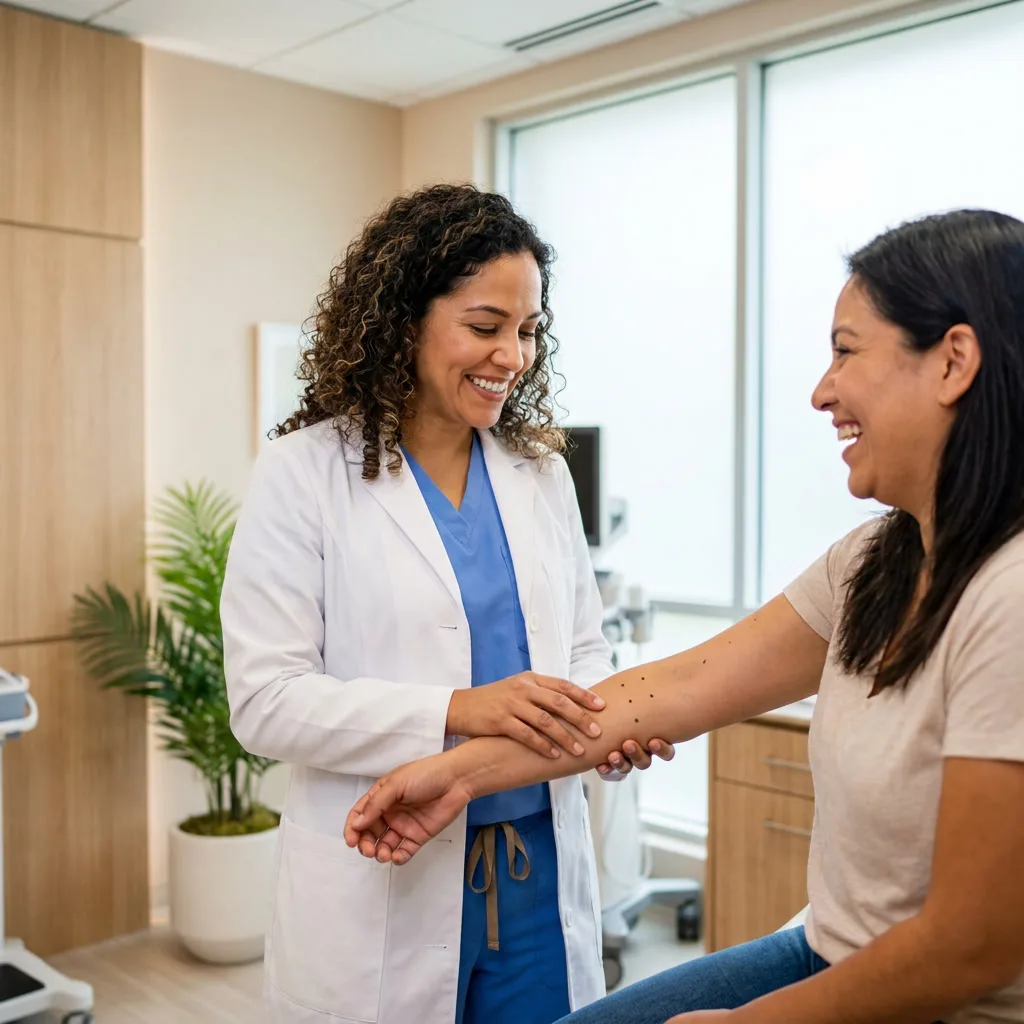
The medical team will often draw the edge of the redness right on your skin. That line becomes the reference point for the next check: if the redness stays inside it or pulls back, the infection is settling down; if it crosses the line, the plan needs a second look.
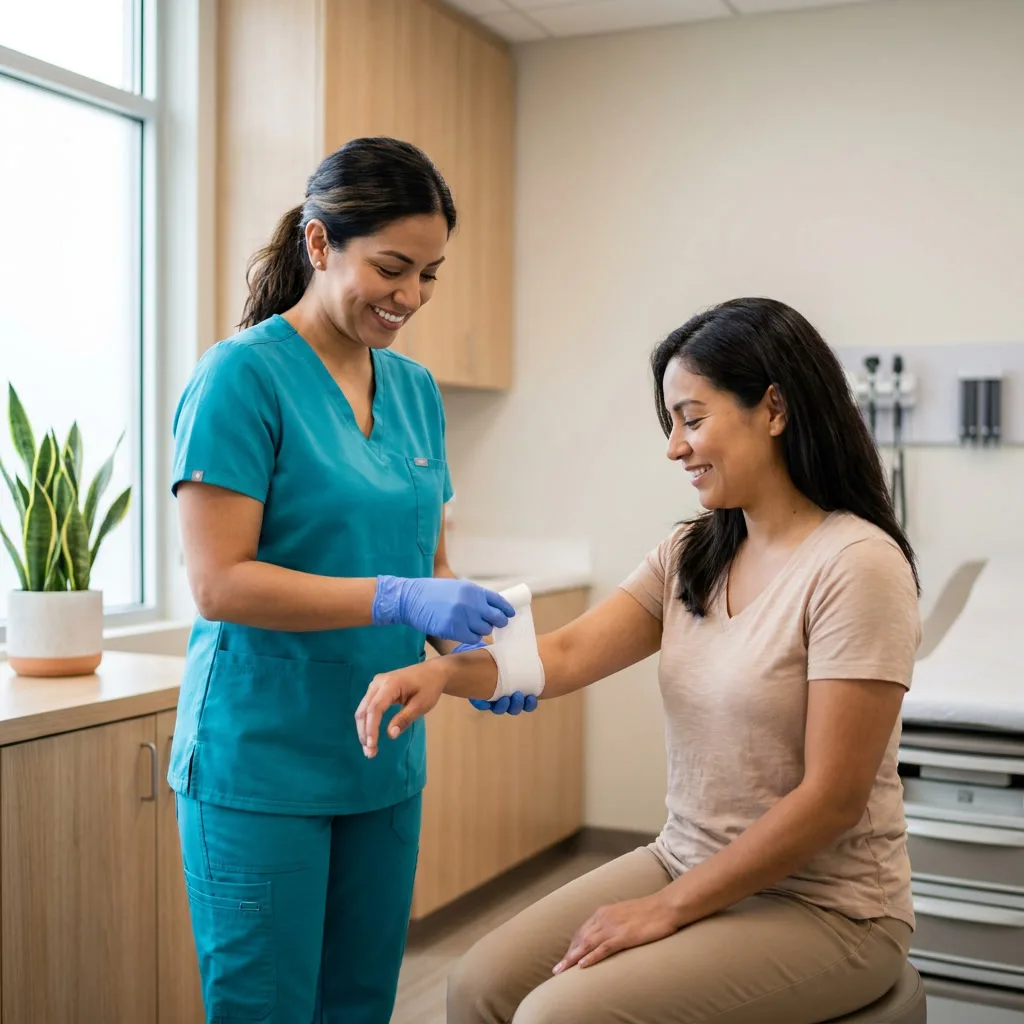
Treatment depends on what that assessment finds. What if the leg needs medicine? Before you leave, tell us which branch suits you: the prescription is sent electronically to the pharmacy you choose, so you get home sooner and can put that leg up. If there is also an open wound, you may need cleanings and dressing changes through wound care. And if the medical team believes the infection needs hospital care, they will tell you so plainly.
Finish the full treatment exactly as directed, even if the leg looks better before you are done, and come back for your recheck on the date you are given.
When cellulitis is an emergency
Call 911 or go to the emergency room, without waiting for a visit, if:
- The redness spreads fast and crosses the line you drew within a few hours.
- You have a high fever, hard chills or shaking.
- Red streaks run up from the area toward the groin or armpit.
- The infection is on the face or around the eye, or it is hard to open or move that eye.
- The pain is far worse than what the skin looks like, or the skin turns purple, dark or fills with blisters.
- You become confused, very drowsy, dizzy when standing up, or start breathing fast.
- You live with diabetes or have a weakened immune system and, on top of that, feel very ill.
Keeping it from coming back
- Treat athlete's foot and dry well between your toes after showering.
- Moisturize dry skin on your legs and heels.
- Wash and cover any cut right away; if the edges gape apart, the wound stitches page explains when it makes sense to close them.
- If you have diabetes, look at your feet every night, soles included, with a mirror if needed.
- If your legs swell often, bring it up at your visit: keeping that swelling under control lowers the chance of cellulitis returning.
If the red patch keeps growing
Clínica Hispana Cruz 4 is at 10100 Beechnut St Ste 240, Houston, TX 77072, near Alief. If your leg is red, hot and swollen, bring the photo with the line you drew and a list of your medicines: comparing the two shows the medical team at a glance whether the infection is moving forward or backing off. But if the redness crosses your mark within hours or comes with a high fever, skip the clinic and go straight to the emergency room.
Need medical attention?
We're here to help. Call now to schedule your appointment or visit our clinic without an appointment.
Call now: +1 (281) 588-0033