"We're going to order some lab work" is one of the most common lines in a doctor's visit, and one that leaves plenty of questions. What are they drawing? Do I skip breakfast? What do those letters and arrows on the report mean? Here are the basics.
The most common tests and what each one tells you
Complete blood count (CBC). It tallies the three families of blood cells: the ones that carry oxygen, the ones that fight infection and the ones that clot. It picks up anemia, some infections and clotting problems.
Metabolic panel. Glucose, kidney function (creatinine), body salts such as sodium and potassium and, in the comprehensive version, the liver. It gives an overall view of how several organs are working at once.
Lipid panel. Measures the fats in your blood: the protective HDL, the artery-clogging LDL, triglycerides and the overall total. The doctor uses them to size up heart risk.
Hemoglobin A1C. Average blood sugar over the past three months, key for diagnosing and tracking diabetes. Our diabetes control guide covers it in depth.
TSH. The hormone that shows whether the thyroid is running fast or slow. Useful with fatigue, unexplained weight changes or hair loss. See our thyroid page.
Urinalysis. Not a blood test, but often ordered alongside: it checks for infection, sugar and protein in the urine.
Do I need to fast?
It depends on the test:
- Yes, 8 to 12 hours for fasting glucose and often for triglycerides. Water only.
- No for A1C, the CBC or TSH.
- Medications are usually taken as normal, with water, unless the doctor says otherwise. If you use insulin or diabetes pills, ask how to adjust them that day to avoid a low.
A handy trick: get your blood drawn early in the morning so the fast overlaps with your sleep. Drinking water makes the vein easier to find.
How to read your results
Each line of the report has three parts: the test name, your value and the reference range, meaning what's expected in healthy people. A number outside the range is usually flagged H (high) or L (low).
A value just outside the range doesn't always mean illness: what you ate, hard exercise the day before or a cold can nudge it. What matters is the whole picture and how it compares with earlier tests. That's why it pays to keep your results and bring them to every visit.
Good questions for the doctor: which value concerns you? Should it be repeated? When should I have this test again?
How often should you get lab work?
- Healthy adults: the doctor decides what to order at the yearly checkup based on age and history.
- If you live with a chronic condition such as diabetes, the doctor usually repeats labs two to four times a year as part of your chronic care.
- With symptoms: when they appear, without waiting for the checkup.
The lab at Clínica Hispana Cruz 4
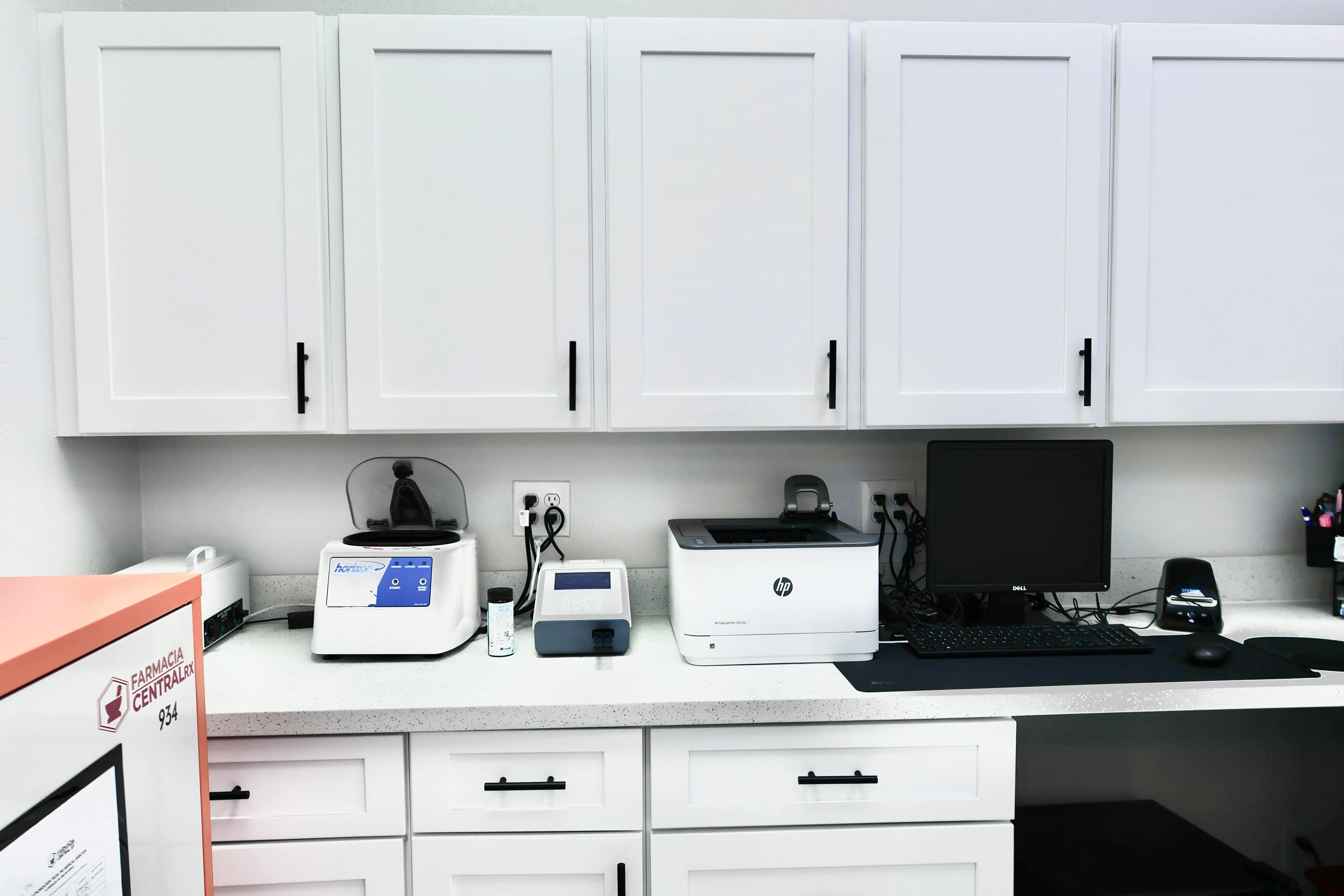
Our clinical lab is inside the clinic, so the visit and the sample happen in one trip:
- Blood draws and drop-off of urine and stool samples, with everything explained in Spanish or English
- We let you know when your results are ready and the medical team walks you through them
- A clear price before the test, no insurance needed
No booking required: Suite 240 at 10100 Beechnut St sees patients all week. Our promotions page sometimes lists fixed-price lab-and-visit packages.
Need medical attention?
We're here to help. Call now to schedule your appointment or visit our clinic without an appointment.
Call now: +1 (281) 588-0033