Nearly every Latino family has someone with "high sugar": a grandmother, an uncle, sometimes yourself. Being common doesn't make it less serious. Well-controlled type 2 diabetes lets people live many years without complications; neglected, it slowly damages the eyes, kidneys, nerves and heart. This guide explains how to tell whether yours is under control and what to do day to day.
The number that matters most: A1C
A glucometer reading changes hour to hour. Hemoglobin A1C is a blood test that shows your average over the past three months. According to the American Diabetes Association:
- Below 5.7%: normal
- 5.7 to 6.4%: prediabetes, the stage where lifestyle changes can still turn things around
- 6.5% or higher: diabetes
For many people who already have diabetes the goal is under 7%, though the doctor adjusts it for age and other conditions. If your A1C is high it gets rechecked every three months; once stable, twice a year is usually enough.
Yearly checks
| What | Why |
|---|---|
| Blood pressure at every visit | High blood pressure plus diabetes multiplies heart risk |
| Cholesterol and triglycerides | To catch the blood fats that clog arteries |
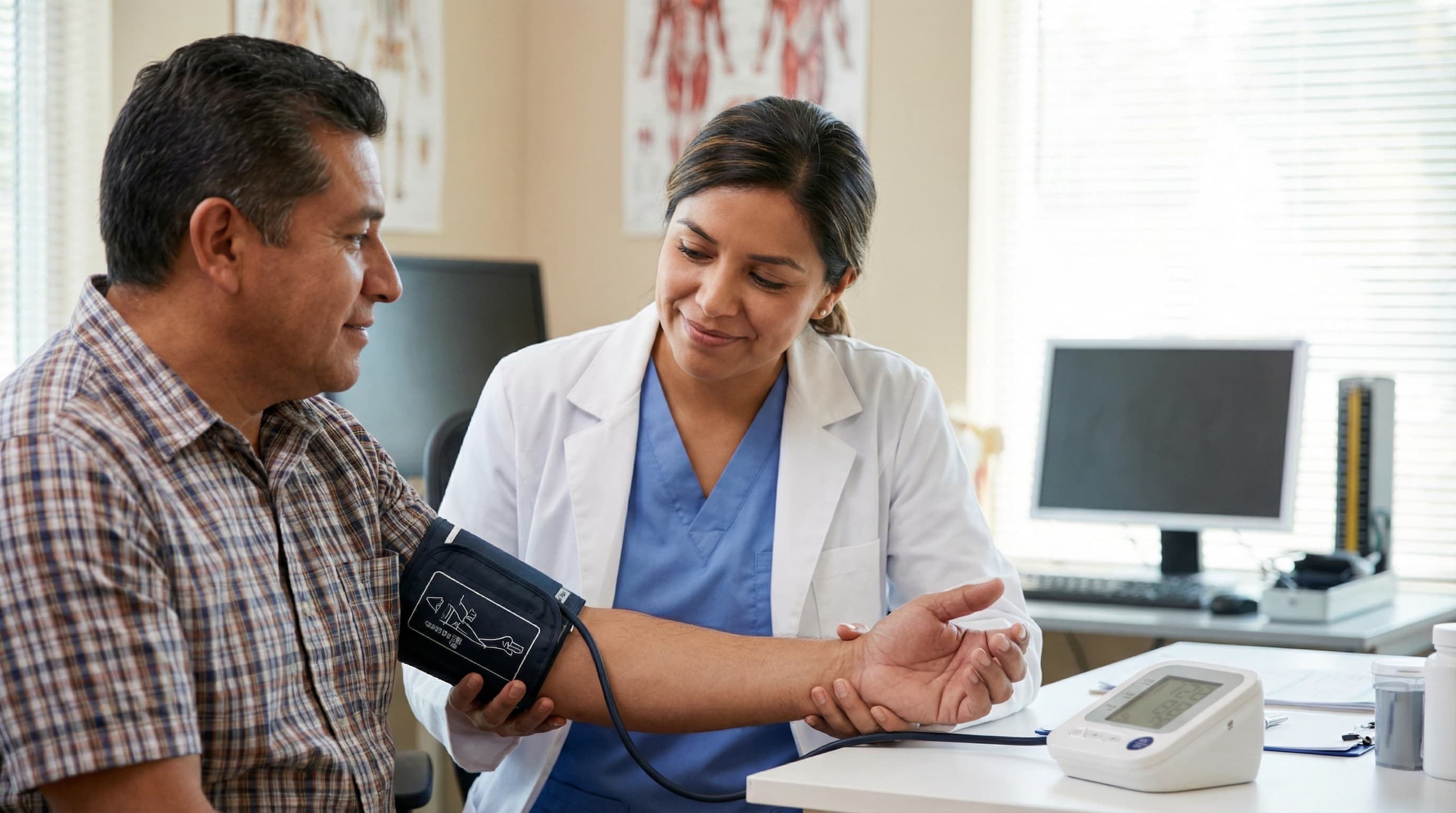
| Kidney function in blood and protein in urine | Kidney damage starts without symptoms |
| Foot exam | To find sores or lost sensation early |
| Dilated eye exam | To detect retinopathy; done by an eye doctor |
If you've taken metformin for years, also ask about vitamin B12, which this drug can lower. Our vitamin B12 guide explains why.
Food, without giving up what's ours
The point isn't to drop Mexican, Central American or Caribbean food but to change the proportions:
- The plate method: half the plate vegetables, a quarter protein (chicken, fish, beans, eggs) and a quarter starch (rice, tortilla, potato, plantain).
- Tortillas: two corn tortillas instead of four flour ones.
- Drinks: soda, juice and sweetened aguas frescas raise glucose faster than any meal. Swap them for water, sparkling water or unsweetened fruit water.
- Whole stewed beans rather than refried beans made with lard.
- Pan dulce as an occasional treat, not a daily habit.
Movement and medication
Walking 30 minutes a day, five days a week, helps insulin work better. If your job is very physical, that counts too, but don't let it become the excuse to skip walking on days off.
Take your medications as prescribed even when you feel fine: diabetes doesn't hurt until it has already done damage. If a medicine disagrees with you or you can't afford it, say so at your visit; there are almost always alternatives.
Warning signs
Get care the same day for very high glucose with intense thirst, vomiting or confusion; a foot wound that won't close or turns red; or low-sugar episodes with shaking and cold sweats that don't improve after eating something sweet.
Your diabetes care at Clínica Hispana Cruz 4
Through our chronic care program the medical team follows your diabetes, blood pressure and cholesterol, in Spanish:
- A1C, glucose, cholesterol and kidney function in our lab
- An EKG when indicated
- A check of your feet and of the medications you take
- A clear price before each visit, no insurance needed
No need to book your next checkup: stop by Suite 240 at 10100 Beechnut St, weekends included. For general reading, see the NIH diabetes pages.
Need medical attention?
We're here to help. Call now to schedule your appointment or visit our clinic without an appointment.
Call now: +1 (281) 588-0033