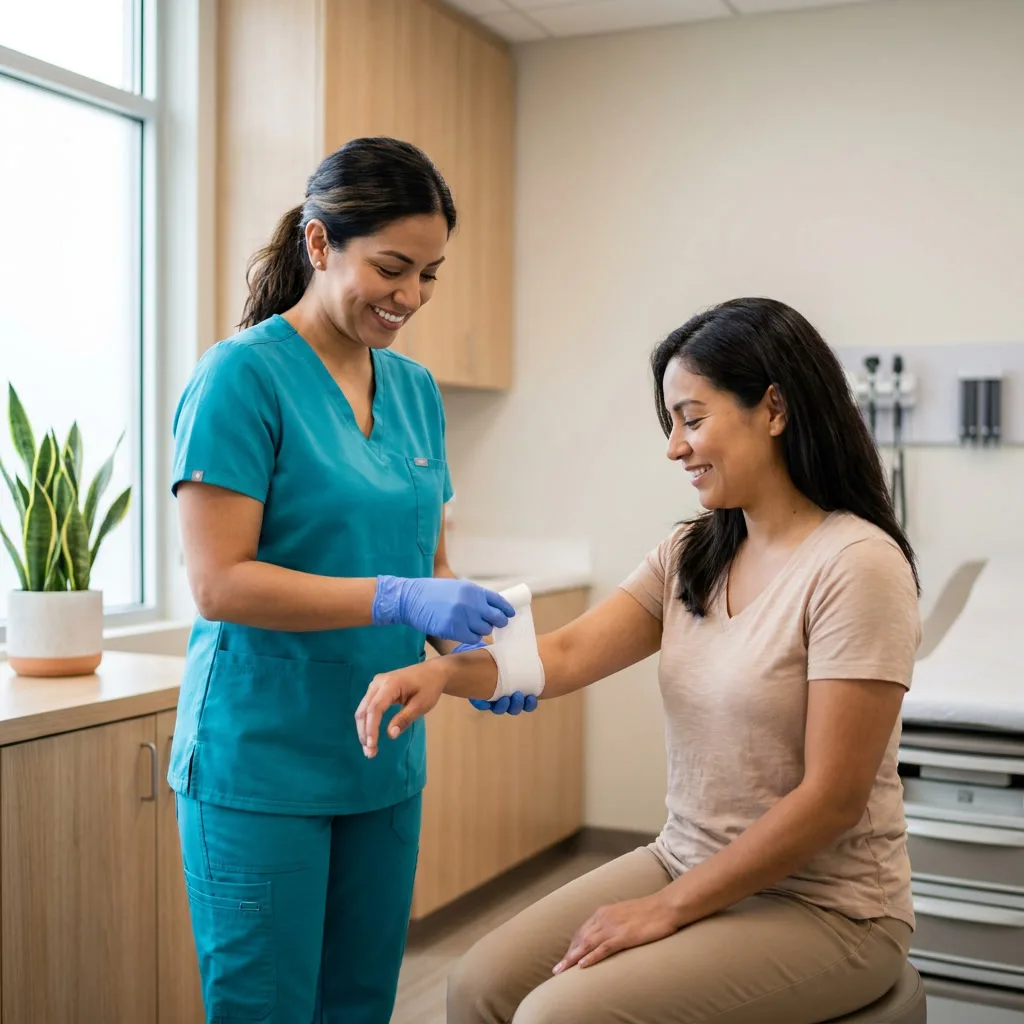

The pill pack left in another purse, the night shift that throws off your schedule, the week you were traveling and forgot the eight o'clock dose. Many women ask about the birth control shot for exactly that reason: they want a method that doesn't rely on remembering something every single day.
It's a practical option, but it works best when you know ahead of time what the calendar looks like, which changes it brings to your body and what to do if you miss the date. In this guide, the medical team at Clínica Hispana Cruz 4 walks through what's worth knowing before your first injection and during the months you use it.
How it works, in a nutshell
The shot contains a hormone that stops ovulation: if the ovary doesn't release an egg, there's no pregnancy. It also thickens the mucus at the cervix, which makes it harder for sperm to get through. There's nothing to take daily and nothing to place at home; the injection at the clinic does all the work.
Used on time, it's a very effective method. Most pregnancies on the shot happen because the next dose came late, not because the method itself failed.
How often you get it
The general rule is simple: one injection every three months. That's the number to keep in mind, and the one worth writing down before you leave the exam room.
A few ideas so you don't lose track:
- Put the next appointment in your phone before you walk out, with a reminder a week ahead
- Write the date on the card you're given, or snap a photo of it
- If your schedule is hectic, tie the date to something fixed: the change of season, a quarterly bill, someone's birthday
What if you're late
Running a few days behind happens to anyone. What matters is not letting it slide and not getting the next one on your own without checking in first. If the date has passed:
- Use condoms from that point on until we tell you you're protected again
- Come in as soon as you can and tell us how many days late you are and whether you had unprotected sex
- Before the new injection we'll probably ask for a pregnancy test, so you restart knowing there's no pregnancy underway
The longer the delay, the more this step matters. It isn't a scolding: it's how the method gets restarted safely.
Before your first injection
At the birth control visit we review your history before recommending anything: blood pressure, migraines, smoking, past pregnancies and the medications you take, because some conditions make a method a poor fit.
Where you are in your cycle also matters. Depending on the day of your period, protection may start right away or you may need condoms as backup for the first few days; we tell you at that visit so you leave without doubts. If you're coming from another method, such as the pill or the arm implant, we explain how to switch without a gap in coverage.
What to expect in the first months
The shot doesn't agree with every woman the same way. These are the most common changes, and it helps to know them in advance so you don't get alarmed or drop the method without talking it over:
| Change you see on the shot | Usual reason | Your next step |
|---|---|---|
| Spotting or bleeding on unexpected days | The most frequent change early on | Jot it down and bring it up at follow-up |
| Longer or shorter periods | Your body is adjusting to the hormone | Give it a few months before deciding |
| Periods get light or stop | Common with continued use; not a problem in itself | If you suspect pregnancy, take a test |
| A little weight gain | Happens to some women, not all | We review it and consider another option if it worries you |
| Soreness or a bruise at the injection spot | Mild local reaction | Should ease within a few days |
The bleeding pattern is the main reason some women stop the shot. Knowing it's expected, and that it often settles over time, makes it easier to decide calmly.
When you want to get pregnant
This is the point most worth thinking through before you start. With the shot, fertility doesn't come back the moment you stop: it can take several months longer than with the pill. That doesn't mean the method harms fertility, only that the body needs time to start ovulating again.
So if you're planning a pregnancy within the next year, bring it up at the visit: a method you bounce back from faster may suit you better. And if you're already on the shot and want to conceive, stop it well ahead of time and start habits like folic acid now.
What the shot doesn't do
The shot prevents pregnancy, and that's all. It doesn't protect against infections passed on through sex; condoms are still needed for that. Nor does it replace routine care: your Pap smear and your gynecology checkup are still due on schedule, even when your method is up to date.
On the shot: when it's an ER or 911 matter
Most changes on the shot are annoying but not dangerous. These situations, though, shouldn't wait for a follow-up visit:
- A suspected pregnancy, or a positive test, together with sharp pain on one side of the belly or bleeding
- Bleeding so heavy it soaks through your clothes and comes with dizziness or fainting
- Intense pain low in the belly that comes on suddenly
- A high fever along with pelvic pain
If the injection spot keeps getting redder, hotter or starts to ooze pus, come in to have it checked soon.
If you want to switch methods
You don't have to stick with the shot if it doesn't suit you. If you'd rather go back to the pill, we set it up so you start on time. If you're interested in the implant or an IUD, we explain how they work and help you find where to have it placed. And if you have an implant that has run its course, we handle arm implant removal at the clinic and get your next method ready during that same visit.
Your next shot on Beechnut
If you're coming to Clínica Hispana Cruz 4 on Beechnut (Houston, 77072), bring the card or photo showing the date of your last injection, a list of the medications you take and the date of your last period. With those three details we know whether the shot is due now, whether a pregnancy test should come first or whether it's a good moment to talk about another method. The injection is given in the exam room, and we explain in Spanish what to expect until the next date.
Need medical attention?
We're here to help. Call now to schedule your appointment or visit our clinic without an appointment.
Call now: +1 (281) 588-0033